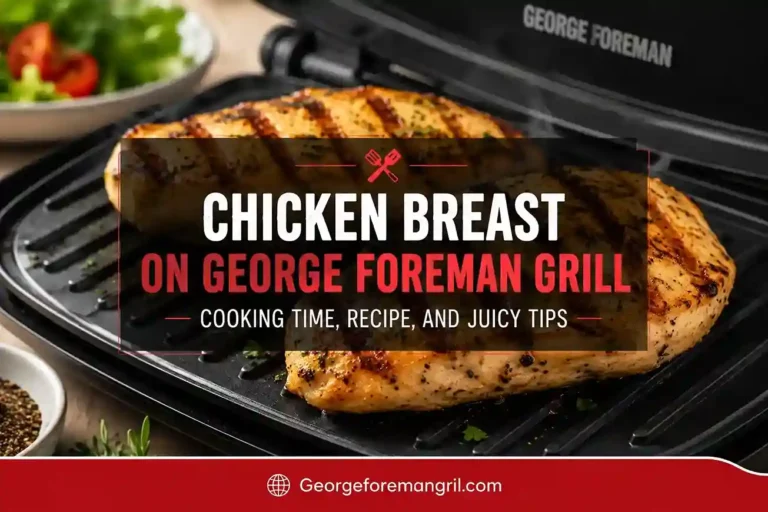
Fresh asparagus is one of the quickest vegetables you can cook on a George Foreman Grill. But because it cooks so fast, it is also easy to overcook. Many people end up with asparagus that is too soft, burnt on the outside, or missing the light grill marks they were hoping for. The good news is that a few simple steps can help you get great results every time.
This guide shows you exactly how to cook asparagus on a George Foreman Grill, including the best preparation method, cooking times, seasoning ideas, and tips for keeping the spears tender-crisp. Whether you are making a quick side dish for grilled chicken, steak, burgers, or fish, you’ll learn how to make flavorful asparagus in just a few minutes.
Why This Recipe Works
Cooking asparagus on a George Foreman Grill is simple because the heated plates cook both sides at the same time. There is no need to flip the spears, which helps save time and makes the process easier for beginners.
This recipe also works well because it uses just a small amount of oil. A light coating helps the asparagus brown while allowing its natural flavor to stand out.
Another benefit is speed. After the grill is hot, most batches are ready in less than 10 minutes. That makes grilled asparagus an easy side dish for busy weeknights.

Key Benefits
- Ready in about 10 minutes
- No flipping required
- Uses simple pantry ingredients
- Naturally low in carbohydrates
- Pairs well with almost any grilled protein
- Suitable for beginners
Ingredients
You only need a few basic ingredients to make flavorful George Foreman grill asparagus.
- 1 pound fresh asparagus
- 1 tablespoon olive oil
- ½ teaspoon salt
- ¼ teaspoon black pepper
- ½ teaspoon garlic powder, optional
- Lemon wedges, for serving
- Grated Parmesan cheese
- Balsamic glaze
- Red pepper flakes
- Fresh parsley
- Crumbled feta cheese
- George Foreman Grill
- Mixing bowl
- Measuring spoons
- Tongs or silicone spatula
- Cutting board
- Chef’s knife
- Paper towels
How to Prepare Asparagus for the George Foreman Grill
Taking a few minutes to prepare the asparagus makes a noticeable difference. Proper trimming and drying help the spears cook evenly and develop better grill marks.
Remove the tough bottom portion of each asparagus spear to improve both texture and flavor before grilling.
Hold each spear with both hands and bend it gently. It naturally snaps where the woody section ends.
Line up the asparagus on a cutting board and trim about 1 to 2 inches from the bottom with a sharp knife.
If the asparagus is very thick, lightly peel the lower half with a vegetable peeler to help it cook more evenly.
Whole asparagus is easier to handle, stays juicier, cooks more evenly, and is less likely to fall between the grill plates.
Cut the asparagus into smaller pieces only if you plan to use it in pasta, salads, grain bowls, or omelets after grilling.
Rinse the asparagus under cool running water, then dry it thoroughly with paper towels or a clean kitchen towel. Dry spears brown better on the grill.
Toss the asparagus with olive oil, salt, black pepper, and optional garlic powder until lightly coated. Use only a thin layer of oil for the best grill marks.
How to Cook Asparagus on a George Foreman Grill
Cooking asparagus is straightforward, but following the steps in order helps you get the best texture and flavor.
Turn on your George Foreman Grill and let it preheat for about 5 minutes, or until the ready light comes on if your model has one.
Starting with a hot grill helps the asparagus cook evenly and creates better browning.
After trimming and drying the asparagus, toss it with olive oil, salt, pepper, and any additional seasonings until every spear is lightly coated.
A thin coating works better than a heavy one. Too much oil can reduce browning and create extra grease in the drip tray.
Arrange the asparagus across the grill plates in a single layer without overlapping the spears.
Leave a little space between each spear so the heat cooks them evenly. For a large amount, cook in batches instead of overcrowding the grill.
Close the lid gently and cook for 3 to 8 minutes, depending on the thickness of the asparagus.
- Turns bright green.
- Develops light grill marks.
- Feels tender with slight resistance when pierced with a fork.
- Has tips that stay intact.
For softer asparagus, grill for about one extra minute while watching closely to prevent overcooking.
Carefully remove the asparagus using silicone tongs or a non-metal spatula to protect the grill’s nonstick coating. Serve while it is still hot.
Finish with fresh lemon juice, grated Parmesan cheese, or a drizzle of balsamic glaze for extra flavor.
Grilled asparagus pairs well with George Foreman grilled chicken breast, steak, pork chops, salmon, shrimp, burgers, and grilled sandwiches.
George Foreman Grill Asparagus Cooking Time Chart
The cooking time depends mainly on the thickness of the asparagus. Thin spears cook much faster than thick ones, so checking them early helps prevent overcooking.
Thickness: Less than ½ inch
Cook Time: 3–4 minutes
Texture: Tender with a slight crunch
Thin asparagus cooks very quickly. Check it after about 3 minutes to avoid overcooking.
Thickness: About ½ inch
Cook Time: 4–6 minutes
Texture: Tender-crisp
Medium-sized asparagus is the easiest to cook and develops great grill marks without changing the cooking time.
Thickness: More than ½ inch
Cook Time: 6–8 minutes
Texture: Tender with a firm center
Peel the lower half if the stalks are very thick. Give them extra time instead of increasing the grill temperature.
These cooking times are based on a fully preheated George Foreman Grill with the lid closed. Cooking times may vary slightly depending on your grill model and the thickness of the asparagus.
- Quick weeknight dinners
- Fresh salads
- Pasta dishes
- Grain bowls
Medium asparagus is the most common size found in grocery stores and works well for almost every George Foreman Grill recipe.
Thick asparagus stays juicy but needs a few extra minutes to become tender. Avoid raising the heat, as slower cooking gives the best texture.
These times are based on a fully preheated George Foreman Grill with the lid closed.
How to Know When Asparagus Is Done
Many people rely only on the clock, but the appearance and texture of the asparagus tell you much more than the timer.
Properly grilled asparagus should have a vibrant bright green color, showing it is cooked without losing freshness.
Light brown grill marks add flavor and indicate good contact with the hot grill plates.
The stems should be tender while still holding their shape without becoming soft or mushy.
A fork should slide into the thickest part with just a little resistance for the ideal tender-crisp texture.
The tips should remain firm and attached instead of breaking apart when lifted from the grill.
If the asparagus turns dull green, becomes limp, or starts falling apart when picked up, it has likely been overcooked. Remove it from the grill as soon as it reaches a tender-crisp texture for the best flavor and appearance.
Remember that asparagus continues cooking for a short time after it leaves the grill because of residual heat. Removing it just before it reaches your preferred texture helps prevent it from becoming too soft.
Should Asparagus Be Crunchy or Soft?
The ideal texture is somewhere in the middle. Properly grilled asparagus should be tender-crisp. It should bend slightly without breaking apart and still have a little bite.
Many people accidentally cook asparagus until it becomes soft because they leave it on the grill too long.
Here is a simple guide:
| Texture | Result |
|---|---|
| Raw | Too firm and grassy |
| Tender-crisp | Best texture for most recipes |
| Soft | Acceptable for soups or casseroles |
| Mushy | Overcooked |
If you’re unsure, remove one spear a minute early and taste it. You can always cook it a little longer if needed.
Best Seasonings for George Foreman Grill Asparagus
Asparagus has a mild, fresh flavor that works with many seasonings. Start simple, then add extra ingredients after grilling if you want more flavor.
- Olive oil
- Salt
- Black pepper
- Garlic powder
- Fresh lemon juice
This simple blend lets the natural flavor of the asparagus stand out.
- Fresh Parmesan
- Garlic powder
- Chopped parsley
A rich, savory topping that pairs especially well with grilled chicken or steak.
- Lemon zest
- Fresh dill
- Chopped parsley
- A small amount of butter
Bright and fresh flavors that complement salmon or shrimp.
- Red pepper flakes
- Smoked paprika
- Cayenne pepper
Add a little heat without overpowering the fresh asparagus flavor.
- Crumbled feta
- Fresh lemon juice
- Dried oregano
- Olive oil
A Mediterranean-inspired finish that tastes great with grilled chicken or lamb.
Fresh vs Frozen Asparagus on a George Foreman Grill
Fresh asparagus gives the best results because it contains less surface moisture.
Frozen asparagus can still be grilled, but the texture is usually softer.
Best for grill marks, firm texture, and fresh flavor.
Works, but often turns softer and releases more water.
Use fresh asparagus for the best George Foreman Grill result.
If using frozen asparagus:
- Thaw it first.
- Pat it dry thoroughly.
- Expect slightly longer cooking time.
- Check often because results vary by brand.
Whenever possible, choose fresh asparagus for the best flavor and texture.
Common Mistakes to Avoid
A few simple mistakes can affect the final result. Avoiding them makes it much easier to cook perfect asparagus every time.
Only a light coating is needed. Too much oil can reduce browning, cause excess grease to drip, and make the asparagus taste heavy.
Starting on a cold grill causes the asparagus to steam instead of grill. Always preheat for about 5 minutes.
Thin asparagus cooks fast. Begin checking it after about 3 minutes to avoid a soft or mushy texture.
Very thin and very thick spears cook at different speeds. Cook similar-sized spears together for even results.
Stacking asparagus prevents good contact with the grill plates. Arrange the spears in a single layer.
The George Foreman Grill is made to cook with the lid closed. Keeping it open slows cooking and reduces contact grilling.
Moisture prevents browning. Always dry the asparagus well after washing before placing it on the grill.
What to Serve With Grilled Asparagus
Grilled asparagus works with almost any main dish.
- George Foreman grilled chicken breast
- Lemon chicken
- Garlic herb chicken
- Steak
- Burgers
- Beef kebabs
- Salmon
- Shrimp
- White fish
- Tuna steaks
- Pork chops
- Pork tenderloin
- Grilled sausage
- Rice bowls
- Quinoa
- Pasta
- Couscous
- Roasted potatoes
- Mixed green salads
How to Store and Reheat Leftover Asparagus
If you have leftovers, cool the asparagus before storing it.
Place it in an airtight container and refrigerate for up to 3 days.
For the best texture, avoid storing it while still warm because trapped steam can make it softer.
Heat the asparagus for 1 to 2 minutes, or until it is warmed through.
Warm over medium heat with a small amount of olive oil for a few minutes, turning occasionally.
Heat in 20-second intervals until warm. Stop as soon as it is heated through.
Reheating for too long can make asparagus soft and mushy. Warm it only until heated through.
Leftover grilled asparagus is also delicious served cold in pasta salads, grain bowls, wraps, omelets, or mixed green salads.
Fresh asparagus cooks in about 3 to 8 minutes on a preheated George Foreman Grill.
Thin spears cook faster than thick ones, so check them earlier to avoid overcooking.
A light coating of olive oil helps create better grill marks without making the asparagus greasy.
Keep the lid closed so both grill plates cook the asparagus evenly.
Remove the asparagus when it is tender-crisp for the best flavor and texture.
Fresh asparagus usually delivers better flavor, texture, and grill marks than frozen asparagus.
Arrange the spears in a single layer so they cook evenly and brown properly.
Olive oil, salt, pepper, garlic, and lemon are all you need for fresh, delicious flavor.
Frequently Asked Questions
Final Thoughts
Cooking asparagus on a George Foreman Grill is one of the easiest ways to prepare a healthy side dish in just a few minutes. With the right cooking time, a hot grill, and simple seasoning, you can enjoy tender-crisp asparagus with fresh flavor and light grill marks every time. Whether you’re serving it with grilled chicken, steak, pork chops, salmon, burgers, or shrimp, this recipe is simple enough for beginners and reliable enough to make again and again. Once you learn how quickly asparagus cooks, it will likely become one of your favorite vegetables to prepare on your George Foreman Grill.